
First Impressions: Trump Orders Environmental Policy Changes on His First Day, Focusing on Natural Gas and Gasoline
On January 20, 2025, U.S. time, Trump was sworn in as the new President of the United States. On the first day of his presidency as the 47th president, he signed several important Executive Orders, including:
- The U.S. Will Withdraw from the Paris Agreement: Under the policy ‘Putting America First in International Environmental Agreements’[1], the U.S. will withdraw from the United Nations framework aimed at limiting global temperature rise to less than 2 degrees Celsius, similar to what Trump did in 2017, which was reversed by Biden in 2021. However, the Kasikorn Research Center predicts that this will not have a significant impact as the Paris Agreement does not legally bind the U.S.
- Cancellation of Biden's “Electric Vehicle Mandate”: Under the policy ‘Unleashing American Energy’, Section 2.(e)[2], the Environmental Protection Agency (EPA) will cancel regulations requiring automakers to halve emissions from small cars by 2027, and may also eliminate tax credits for electric vehicles.
- The U.S. Will Resume Drilling for LNG and Gasoline: Under the policies ‘Declaring a National Energy Emergency’[3] and ‘Unleashing Alaska’s Extraordinary Resource Potential’[4], the U.S. will begin drilling for natural gas and gasoline again, with Trump exempting several environmental regulations that restrict drilling, and ordering federal agencies to actively support drilling. Currently, the U.S. is the world's largest exporter of liquefied natural gas and gasoline.
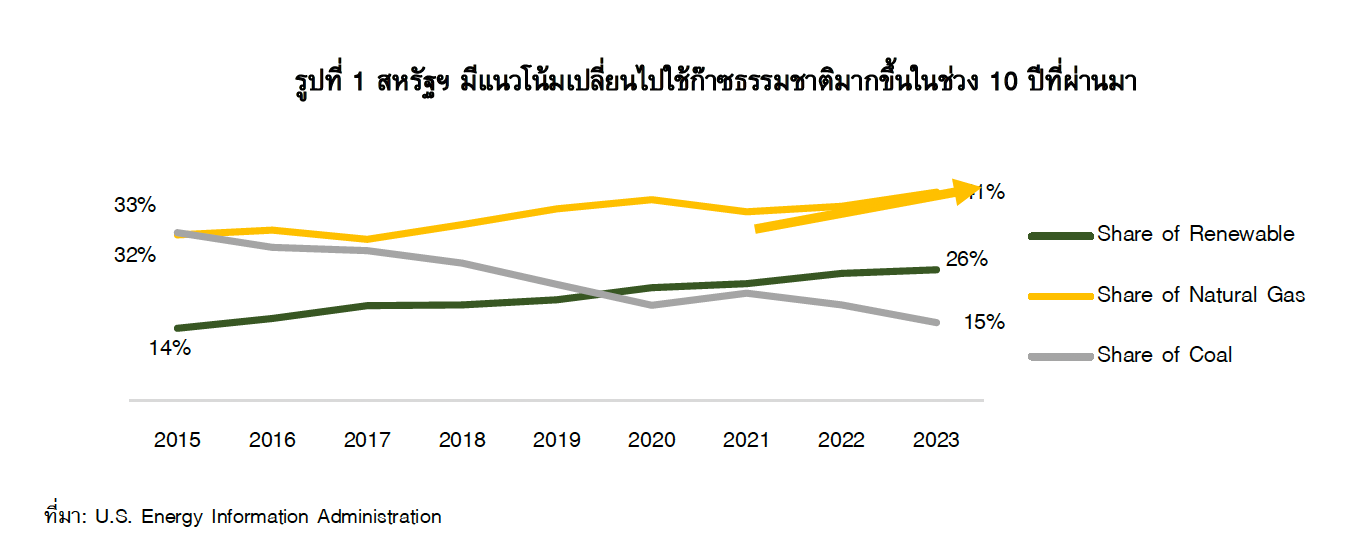
Although Trump is known for making symbolic gestures through numerous Executive Orders, the overall changes may not have significant negative impacts. For example, the withdrawal from the Paris Agreement is similar to what Trump did in 2017.
The Kasikorn Research Center anticipates only minor changes, such as increased drilling for LNG and gasoline, which will enhance the U.S. share in the energy market, ensuring that the U.S. remains the largest exporter of LNG and gasoline in the world.
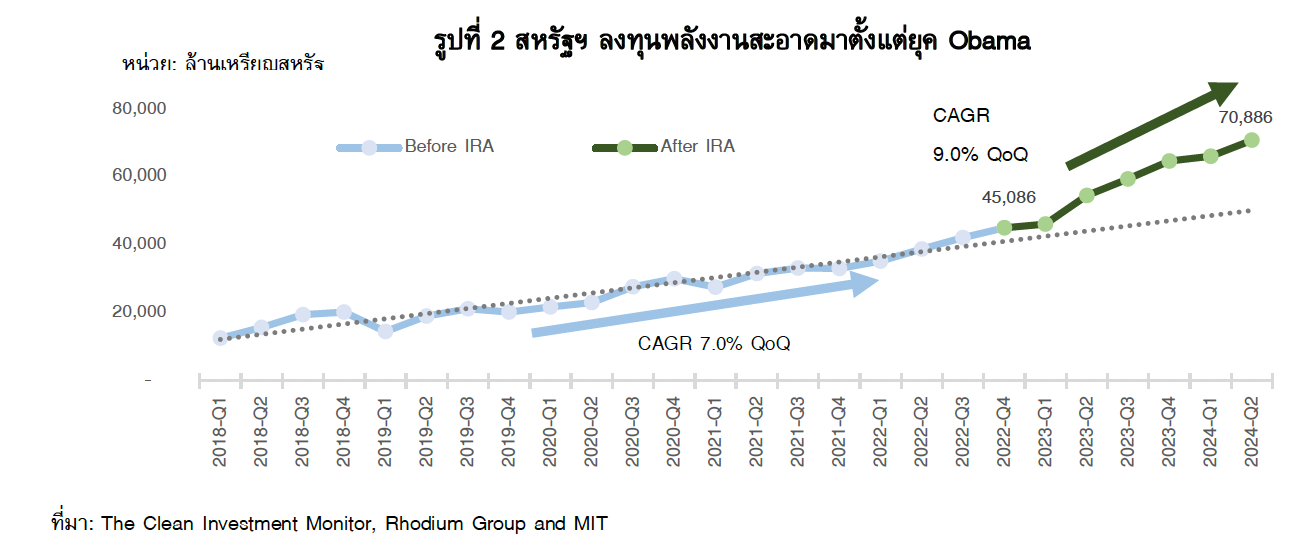
Regarding clean energy, the U.S. has increased clean energy investments since the Obama era, with an average growth rate of 7% per quarter. However, after Biden implemented the Inflation Reduction Act (IRA), the average growth rate of investments accelerated to 9% (see Figure 2). The Kasikorn Research Center believes that the U.S. will continue to see increased clean energy investments, as many states benefit financially through the IRA.

[1] https://www.whitehouse.gov/presidential-actions/2025/01/putting-america-first-in-international-environmental-agreements/
[2] https://www.whitehouse.gov/presidential-actions/2025/01/unleashing-american-energy/
[3] https://www.whitehouse.gov/presidential-actions/2025/01/declaring-a-national-energy-emergency/
[4] https://www.whitehouse.gov/presidential-actions/2025/01/unleashing-alaskas-extraordinary-resource-potential/